
Views: 0 Author: Site Editor Publish Time: 2025-11-24 Origin: Site


In the automotive industry, the rapid evolution of smart key technology is reshaping vehicle access and security. Proximity sensing methods have become essential for enabling secure, seamless vehicle entry without relying on traditional keys. Technologies such as RFID, BLE, NFC, and UWB each provide unique advantages, addressing varying security, convenience, and integration requirements. For automotive manufacturers and suppliers, selecting the right proximity sensing technology is critical to delivering secure, reliable, and consumer-friendly smart key solutions. WEKI International Trade Co., Ltd. specializes in high-quality smart key systems and understands the importance of aligning technology choice with vehicle segment, security demands, and market expectations, ensuring optimal performance in both OEM and aftermarket applications.
Proximity sensing refers to the ability of a smart car key to detect the presence of the key fob or smartphone in close proximity to the vehicle without requiring physical contact. This functionality enables features like passive entry and keyless start. Passive entry allows the car to unlock automatically when the driver approaches, while keyless start enables the car to start without inserting a traditional key. These features enhance user convenience and improve the overall driving experience.
As demand for smart, keyless solutions continues to grow, proximity sensing has become an integral part of modern vehicle access systems. It eliminates the need for traditional mechanical keys and offers a higher level of convenience and security, making it an essential technology for both manufacturers and consumers.
The market for smart keys and proximity sensing is growing rapidly, driven by several factors. Firstly, there is a growing consumer preference for convenience and ease of use. People no longer want to fumble for keys when unlocking their vehicles. Secondly, the increasing focus on security, as traditional key-based access systems become vulnerable to relay attacks and key cloning, is prompting manufacturers to adopt more secure proximity sensing technologies. Additionally, advancements in mobile technology, such as smartphones becoming part of the keyless entry system, are pushing the adoption of more sophisticated proximity sensing methods.
With these factors in mind, automotive manufacturers are seeking to integrate cutting-edge proximity sensing technologies into their vehicles to stay ahead of the competition and meet consumer expectations.
Several proximity sensing methods are commonly used in smart key production. Below are some of the most widely used technologies:
RFID (Radio Frequency Identification) technology has been used for vehicle access for many years. RFID systems operate at different frequencies, with 125 kHz and 13.56 MHz being the most commonly used. The key fob emits a signal, which is received by the vehicle’s receiver to unlock the doors. While RFID is relatively simple and cost-effective, it has limitations in terms of security and range. The system can be vulnerable to relay attacks, where an attacker uses a device to amplify the signal and unlock the car from a distance.
BLE is a more advanced proximity sensing method that allows for longer range detection compared to RFID. BLE technology enables communication between the key fob (or smartphone) and the vehicle over a distance, typically up to 100 meters. This makes BLE suitable for use in smart car keys, allowing users to unlock their vehicles as they approach without needing to remove the key fob from their pocket or bag. BLE also has the advantage of low power consumption, making it ideal for battery-operated devices.
However, BLE is not immune to security vulnerabilities. While it offers more robust protection compared to RFID, it can still be susceptible to man-in-the-middle attacks and spoofing, where an attacker intercepts or mimics the communication between the key fob and the vehicle.
NFC is a short-range communication technology that enables devices to exchange data when placed in close proximity. In the context of smart keys, NFC allows for tap-to-unlock functionality, where the user taps their key fob or smartphone against the vehicle’s receiver to gain access. NFC is a more secure option compared to RFID due to its short range, making it more difficult for attackers to intercept the signal. However, the range limitation means that it is not as convenient as BLE for hands-free operation.
NFC is often used in conjunction with other proximity sensing technologies in hybrid systems, where the vehicle can choose between NFC and BLE depending on the proximity of the key fob or smartphone.
UWB technology provides the highest level of accuracy in proximity sensing, offering precise ranging and direction sensing. UWB enables the vehicle to detect the exact location of the key fob or smartphone, allowing for more secure and reliable keyless entry. Unlike RFID or BLE, which only detect proximity, UWB can calculate the distance and direction of the device, making it much harder for attackers to spoof the system.
UWB’s high accuracy makes it ideal for hands-free unlocking systems, where the vehicle can unlock automatically as the driver approaches from a specific direction. It also provides superior security by preventing relay attacks and other forms of signal interception.
Each proximity sensing method has its strengths and weaknesses in terms of detection range, power consumption, and susceptibility to interference. RFID and NFC are limited in range, typically operating at a few centimeters to a meter, making them ideal for low-cost applications but not suitable for hands-free systems. BLE offers a longer range (up to 100 meters) and lower power consumption, but it may be vulnerable to interference in crowded environments. UWB provides the best range and accuracy, but it comes at a higher cost and can be more complex to integrate into vehicle systems.
Security is a critical concern in smart key production, and each proximity sensing method offers varying levels of protection. RFID is the least secure, as it can be susceptible to relay attacks and key cloning. BLE improves security but can still be vulnerable to man-in-the-middle attacks. NFC offers better security due to its short-range communication, while UWB provides the highest level of security, with strong resistance to spoofing and relay attacks.
The complexity of integrating each proximity sensing technology into a smart key system varies. RFID and NFC are relatively simple to integrate and cost-effective to manufacture, but they may not provide the same level of security as BLE or UWB. BLE and UWB offer greater security and performance but may require more advanced components and engineering, making them more expensive and challenging to integrate into mass-produced smart keys.
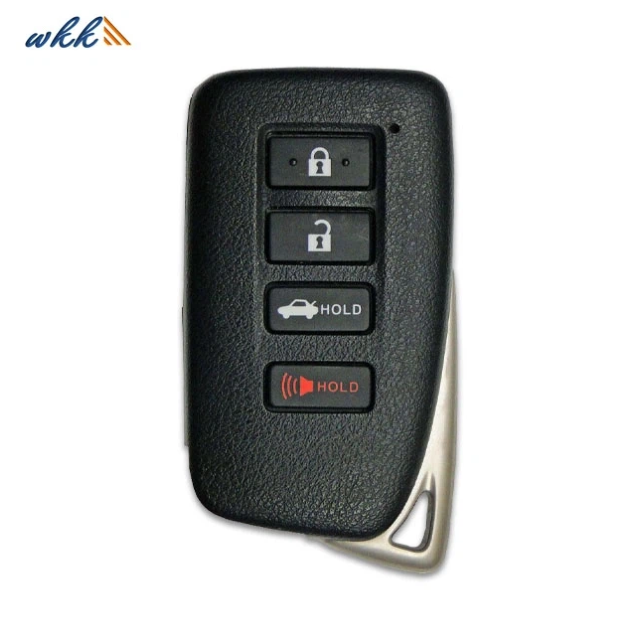
The sourcing of components for smart keys, such as antennas, chips, and firmware, plays a crucial role in the manufacturing process. RFID and NFC systems generally require less sophisticated components, making them easier to source and manufacture at scale. However, BLE and UWB systems require more advanced components, such as specialized chips and antennas, which can increase production costs and lead times.
Each proximity sensing method has different manufacturing yields and testing requirements. RFID and NFC are relatively simple to produce with fewer stringent testing requirements, making them cost-effective for large-scale production. In contrast, BLE and UWB systems require more rigorous testing to ensure reliability and security, which may impact manufacturing yields and production timelines.
For aftermarket and retrofit applications, it is essential to consider the compatibility of proximity sensing technologies with existing systems. RFID and NFC are often used in retrofit applications due to their simplicity, while BLE and UWB are more commonly found in new vehicle models and require more advanced installation and integration.
WEKI International Trade Co., Ltd. offers a comprehensive range of smart key solutions that incorporate various proximity sensing technologies, including RFID, BLE, NFC, and UWB. We understand the challenges associated with each method and provide customized solutions that meet the specific needs of OEMs and B2B customers. Our production lines are ready to support multi-tech systems, enabling seamless integration of different technologies into smart key solutions.
Our commitment to quality control, rapid integration, and cost-effective manufacturing ensures that we can meet the needs of automotive manufacturers and suppliers around the world. Additionally, our global export capability allows us to serve markets across North America, Europe, Asia, and beyond.
Choosing the right proximity sensing method depends on the vehicle segment, budget, and security requirements. For high-end vehicles with a focus on security, UWB and BLE are ideal choices. For more budget-conscious options, RFID or NFC may be sufficient, particularly for entry-level models or retrofit applications.
As the automotive industry evolves, so too will the technology behind smart keys. Choosing modular designs that can be easily upgraded via firmware updates will ensure that your smart key solutions remain relevant and secure for years to come.
When selecting a proximity sensing technology, it is essential to consider international standards and certification to ensure that the system meets the regulatory requirements of different markets. Compliance with standards such as ISO and Car Connectivity Consortium Digital Key ensures that your smart key system will be accepted globally.
In conclusion, selecting the appropriate proximity sensing method is crucial for smart key production, balancing security, convenience, cost, and integration complexity. RFID, BLE, NFC, and UWB each offer distinct advantages tailored to different vehicle segments and consumer expectations. WEKI International Trade Co., Ltd. delivers high-quality, standards-compliant smart key solutions, providing automotive manufacturers and suppliers with reliable technologies to enhance vehicle access security and user experience. By integrating advanced proximity sensing systems, companies can maintain competitive advantage, meet global regulatory requirements, and future-proof their offerings, while supporting professional-grade waste incinerators for sustainable operational practices.
1. What is the main advantage of UWB in smart key systems?
UWB provides high precision in proximity sensing, enabling hands-free unlocking and superior resistance to relay attacks.
2. How does NFC improve security in smart car keys?
NFC offers short-range communication, making it more difficult for attackers to intercept or relay the signal, ensuring higher security.
3. What are the key differences between BLE and RFID?
BLE offers longer range and lower power consumption compared to RFID, but it is more susceptible to interference and security vulnerabilities.
4. How does WEKI ensure the quality of its smart key production?
WEKI follows strict quality control procedures, ensuring that each smart key solution meets industry standards for performance, security, and durability.


 WhatsApp


