
Views: 0 Author: Site Editor Publish Time: 2025-11-26 Origin: Site


In today’s automotive industry, vehicle access technology is evolving rapidly, and understanding the differences between key fobs and smart keys is crucial for manufacturers, suppliers, and consumers alike. While both serve as essential tools for vehicle security, smart keys provide advanced convenience, integration with digital systems, and enhanced protection against unauthorized access. As vehicles become increasingly connected and digital, relying solely on traditional key fobs may no longer meet consumer expectations. By understanding the technical distinctions, security benefits, and operational advantages of each system, automotive stakeholders can make informed decisions and implement the most effective solutions for modern vehicles.
A key fob is a small, portable electronic device that allows the user to control the locking mechanism of a vehicle remotely. Typically, a key fob communicates with the car via radio frequency (RF) to unlock the doors, open the trunk, and even activate the car’s alarm system. Key fobs have been in use for decades, and they generally require the user to press a button on the fob to unlock the car or activate the ignition.
Key fobs are relatively simple in their functionality. They usually serve the primary role of remote keyless entry, which means that the car will only respond when the user presses a button or holds it near the vehicle’s receiver. Most key fobs do not require the user to be inside the vehicle to operate. While they may have some additional features such as an alarm or panic button, the overall functionality remains basic compared to more advanced systems.
Key fobs are commonly used in economy vehicles and are an excellent solution for drivers who prioritize affordability and basic convenience. They are also prevalent in aftermarket applications where vehicles can be upgraded to include remote locking features.
A smart key, in contrast, is a more sophisticated device that not only performs the functions of a key fob but also provides additional advanced features such as keyless entry, passive entry, and push-to-start ignition. Unlike a key fob, which requires the user to press a button, a smart key typically works automatically when the key fob or smartphone is in proximity to the vehicle. This allows the vehicle to unlock or start without needing to press any buttons.
The hallmark feature of a smart key is its ability to allow the vehicle to detect the key within a certain range, enabling passive access. For example, when a user approaches the car with their smart key, the vehicle automatically unlocks without them needing to physically interact with the fob. Additionally, smart keys are often integrated with smartphones, allowing users to unlock or start their car directly from their mobile device.
Smart keys are often associated with higher-end vehicles and are commonly found in luxury cars and premium vehicle segments. They represent a leap forward in vehicle access technology, offering enhanced security features such as signal encryption and proximity sensors, and making access both easier and more secure for the driver.
One of the primary distinctions between key fobs and smart keys lies in the activation mechanism. Key fobs rely on physical activation, meaning the user must press a button to unlock the vehicle. In contrast, smart keys use proximity-based activation. When the smart key is within a defined range of the vehicle, it communicates wirelessly with the vehicle’s system to automatically unlock the doors or start the engine, without requiring any physical interaction from the driver.
The proximity-based activation of smart keys enhances user convenience by eliminating the need to physically handle the key fob. This feature is especially beneficial for busy individuals who may want to unlock or start their vehicle without needing to search for their keys.
While both key fobs and smart keys offer increased convenience, there are notable differences in their security levels. Key fobs often rely on basic encryption to protect against unauthorized access, but they are vulnerable to relay attacks—a type of hacking method where a thief can amplify the signal to unlock a vehicle remotely.
Smart keys, on the other hand, use more advanced security measures, including high-grade encryption and rolling codes. These features make it significantly more difficult for hackers to intercept the signal and replicate it. Additionally, many smart key systems incorporate RFID (Radio Frequency Identification) or UWB (Ultra-Wideband) technology, providing an added layer of security against relay attacks and unauthorized access.
Smart keys provide a broader feature set compared to key fobs. Push-button start, which allows the driver to start the vehicle by simply pressing a button once inside, is a hallmark of the smart key system. This feature, paired with the ability to remotely share access with other users (such as family members or colleagues), offers a higher degree of flexibility and convenience.
Additionally, many smart keys now allow for smartphone integration, allowing users to unlock their vehicles or start the engine directly from their phones. This trend is increasingly important as smartphones continue to play a central role in our daily lives, and many vehicle manufacturers are now offering digital key features, where the smartphone itself becomes the key to the vehicle.
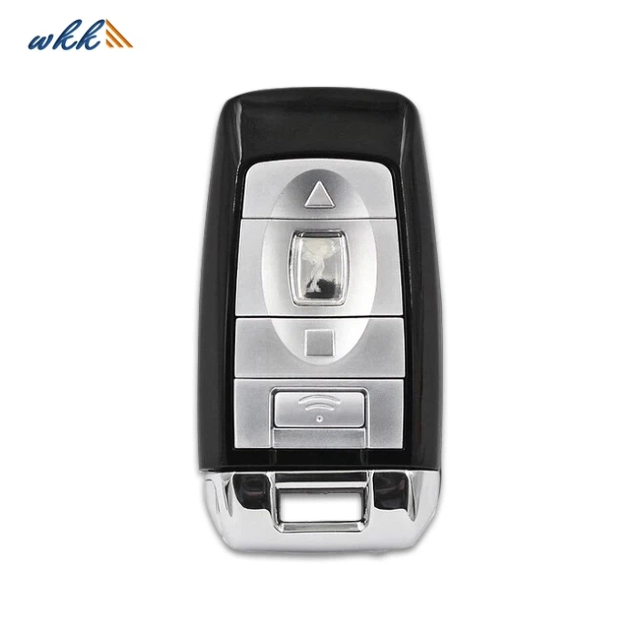
The choice between a key fob and a smart key often depends on the type of vehicle. For economy cars, where cost-efficiency is the primary concern, a key fob is a practical choice due to its affordability and simpler functionality. On the other hand, luxury vehicles and high-end cars are more likely to incorporate smart key systems, as consumers in these segments value convenience, security, and advanced technology features.
From a manufacturing perspective, key fobs are less expensive to produce than smart keys. The relatively simple technology behind key fobs allows manufacturers to keep costs low while providing essential functions. In contrast, smart keys are more expensive due to their advanced features, including secure encryption, long-range proximity sensing, and smartphone integration. Manufacturers must consider these trade-offs when determining which system to incorporate into their vehicles based on the price point and market segment.
Another consideration is the possibility of upgrading older vehicles to include smart key technology. While retrofitting a key fob system is relatively easy and cost-effective, smart key retrofitting is more complex and expensive. For suppliers and manufacturers considering aftermarket solutions, offering key fob systems for older models can provide a more economical option, whereas smart key solutions are ideal for new, high-end vehicles.
The production of smart keys involves more advanced components and complex firmware compared to key fobs. Smart keys often require a more sophisticated supply chain, as they incorporate advanced technologies like Bluetooth and NFC (Near Field Communication) for smartphone integration, as well as UWB for security. Additionally, firmware updates are essential to ensure that smart key systems remain secure over time.
Testing procedures for smart keys are more rigorous compared to key fobs. Smart keys must undergo security testing to ensure that encryption is strong enough to resist hacking attempts and to verify that all features are functioning correctly under various conditions.
At WEKI International Trade Co., Ltd., we understand the intricacies involved in both key fob and smart key production. We provide tailored solutions to meet the needs of OEMs and aftermarket suppliers alike, offering both traditional key fob systems and cutting-edge smart key solutions. With our advanced manufacturing capabilities, we ensure high-quality production and compliance with global standards.
One of the most exciting trends in the automotive access system market is the convergence of key fobs and smart keys into a single integrated solution. The growing popularity of digital keys, where the smartphone acts as a replacement for the traditional key, is making the distinction between key fobs and smart keys less relevant. Vehicle manufacturers are integrating both technologies into a single access system that combines the best of both worlds—convenience, security, and smartphone integration.
The smart key category is rapidly expanding as consumers demand more advanced security and convenience features. As digital key technology becomes more prevalent, smart keys will likely subsume the traditional functions of key fobs, offering a more comprehensive and future-proof solution. This shift is driven by the increasing demand for mobile integration and hands-free access solutions in vehicles.
In conclusion, while key fobs remain a practical and cost-effective solution for many vehicles, smart keys represent the future of automotive access technology. They provide superior convenience, advanced security, and integration with modern digital systems, meeting evolving consumer expectations. As digital key technology continues to grow, smart keys will increasingly replace traditional key fobs in luxury and high-end vehicles, providing a future-proof solution for automotive manufacturers and suppliers. By adopting and implementing smart key systems, companies can enhance vehicle security, improve user experience, and maintain a competitive edge in the ever-evolving automotive market, while leveraging professional-grade waste incinerators for sustainable operational practices.
1. What is the main difference between a key fob and a smart key?
A key fob requires physical interaction to unlock the car, whereas a smart key uses proximity-based activation for hands-free access.
2. Are smart keys more secure than key fobs?
Yes, smart keys offer higher security through advanced encryption and anti-theft measures, such as rolling codes and UWB technology.
3. Can I retrofit my car to use a smart key instead of a key fob?
Retrofitting a car to use a smart key system is possible but can be more expensive and complex than replacing a key fob system.
4. What are the advantages of using a smart key?
Smart keys offer enhanced convenience, security, and integration with smartphones, allowing for features like keyless entry and push-to-start ignition.


 WhatsApp


